
What Physicians Need to Know About the New Federal Student Loan Caps
June 8, 2026
Federal changes to student loans are set to take effect on July 1, 2026 — and while you may be past your own borrowing days, the implications of this shift are likely closer to home than you might expect.
Whether you have a family member considering medical school or you’re thinking about the next generation of healthcare workers joining your practice, here’s a quick overview of the upcoming changes and what they mean.
New Borrowing Rules
For those starting medical school on or after July 1, federal borrowing is now limited to $50,000 per year or $200,000 in aggregate for graduate education, with a universal lifetime cap of $257,000 for undergraduate and grad school borrowing combined.
The changes stem from the One Big Beautiful Bill Act (OBBBA), a sweeping budget reconciliation bill that was signed into law in 2025. Students who began borrowing before July 1, 2026 can continue under the existing loan limits for up to three years or until their expected graduation date — whichever comes first.
Grad PLUS Program Ending
The bill also eliminates the Grad PLUS loan program, meaning medical students will no longer be allowed to borrow up to their school’s total cost of attendance — including living expenses and other costs not covered by financial aid — with no annual or aggregate limits and a fixed interest rate.
Other Professions Affected
The OBBBA will restrict federal borrowing power for non-physicians as well. Students in nursing, physical therapy, occupational therapy and physician assistant programs will be reclassified under the law from “professional degree” to “general graduate degree” status, reducing their federal loan limits to $25,000 per year and $100,000 overall, instead of the higher professional limits. See the chart below for a quick overview of how the changes will affect borrowing, or view the American Medical Association’s more comprehensive breakdown.
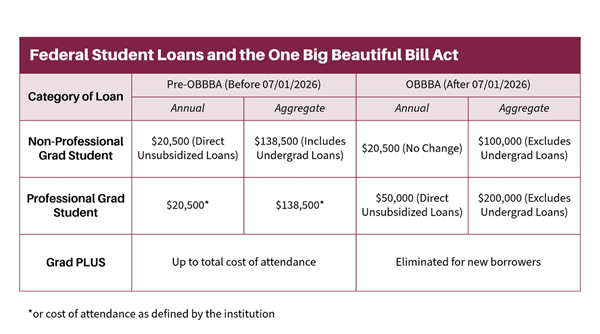
Source: American Medical Association, Scholarship Owl